|
|
Last
Modified on
Aug 02, 2026
A Louisiana will does more than explain who should inherit your property. It can also name the person you want to manage your succession after your death.
That person is called the executor. “Succession representative” is the broader Louisiana term that includes both an executor named in a will and an administrator appointed when there is no executor.
Choosing an executor should not be treated as an honorary family designation. The person may be responsible for protecting property, communicating with beneficiaries, addressing debts, working with attorneys and accountants, and carrying the succession through the court process.
Here are four important qualities to consider when choosing an executor in Louisiana.
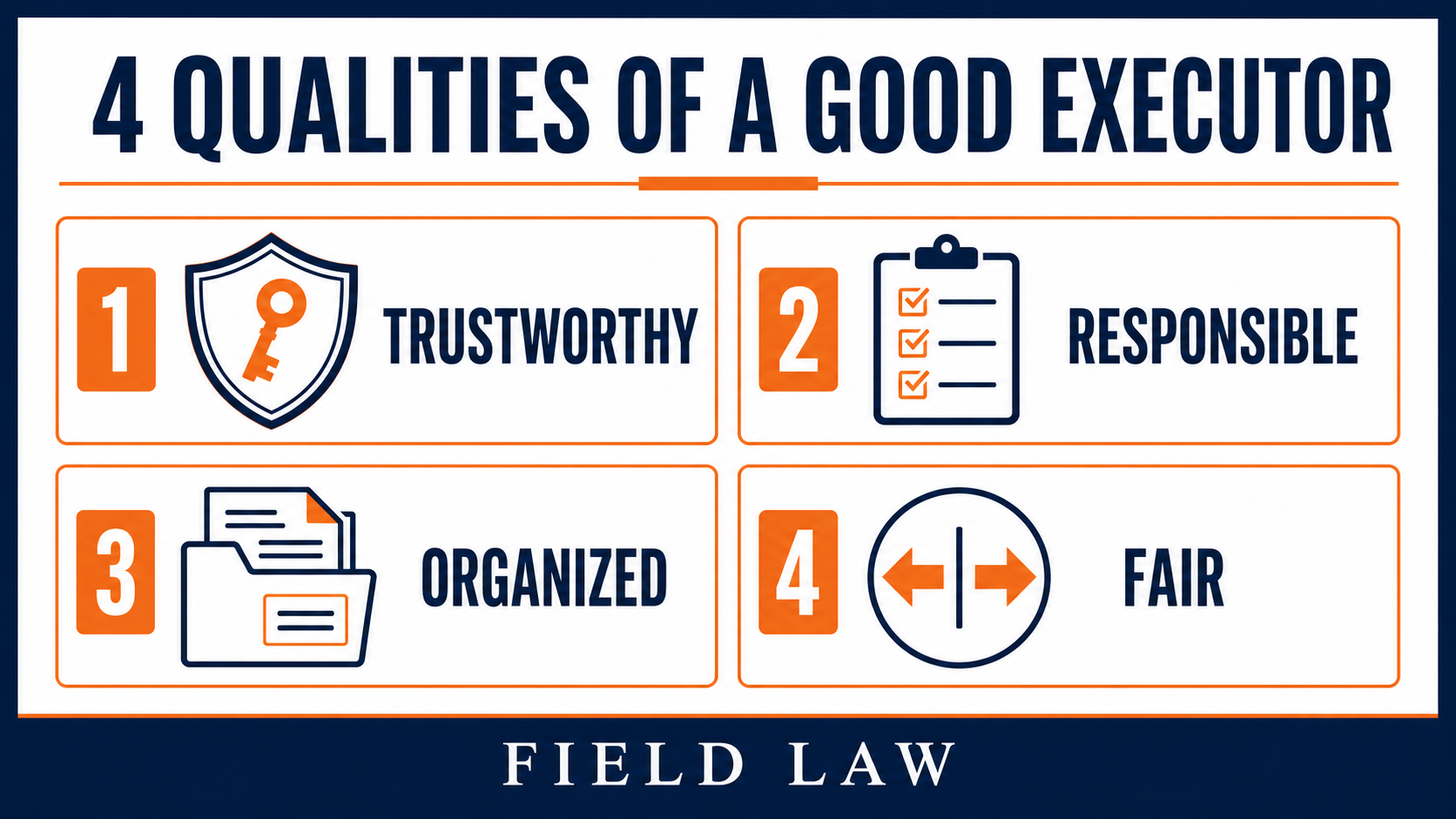
1. Trustworthy
An executor may have access to bank accounts, personal records, real estate, business information, digital accounts, and valuable personal property. Trustworthiness is therefore the most important qualification.
Under Louisiana Code of Civil Procedure article 3191, a succession representative is a fiduciary who must collect, preserve, and manage succession property in accordance with the law. The representative must act as a prudent administrator and may be personally responsible for damage caused by failing to do so.
The person you choose should understand that estate property does not belong to the executor. The executor cannot use estate money for personal expenses, favor one beneficiary improperly, make unauthorized gifts, or treat the position as an opportunity for personal gain.
Consider how the person has handled responsibilities in the past. Does the person respect boundaries? Can you trust the person with confidential financial and family information? Will the person follow your will even if the person would have made different decisions?
A close relationship is not enough if the person has a history of financial problems, dishonesty, family manipulation, or disregard for other people’s property.
Our article about what a Louisiana succession representative cannot do explains more about the representative’s duties and limitations.
2. Responsible
A good executor must be dependable and willing to complete tasks on time.
Depending on the estate, an executor may need to:
- Locate and present the original will
- Petition the court for confirmation
- Obtain letters testamentary
- Secure homes, vehicles, accounts, and personal property
- Gather financial statements and ownership records
- Identify heirs and legatees
- Prepare an inventory or sworn detailed descriptive list
- Address valid debts and administration expenses
- Maintain insurance and preserve estate property
- Work with tax professionals when returns are required
- Communicate with heirs, legatees, creditors, and attorneys
- Participate in the sale or transfer of property
- Complete accountings and distributions
- Obtain a judgment of possession and close the succession
The executor does not have to perform every task personally. Attorneys, accountants, appraisers, real estate professionals, and other advisers can provide assistance. However, the executor must remain engaged, respond to requests, make decisions, and provide the information those professionals need.
A person who routinely ignores correspondence, misses deadlines, avoids difficult decisions, or becomes overwhelmed by ordinary paperwork may not be the best choice.
It is also wise to speak with the proposed executor before naming that person. Confirm that the person understands the general role and is willing to serve. An executor can decline the appointment, and discovering that after death can delay the succession.
3. Organized
Louisiana successions can involve a large volume of information. Even a relatively modest estate may include bank statements, deeds, vehicle titles, insurance policies, bills, tax records, beneficiary information, passwords, and personal property.
An organized executor should be able to:
- Keep estate property separate from personal property
- Maintain records of money received and spent
- Preserve important documents
- Track deadlines and requested information
- Respond promptly to attorneys and other professionals
- Document decisions involving estate property
- Provide understandable information to beneficiaries
- Follow a matter through to completion
Organization becomes especially important when the estate includes rental property, a business, property in another state, numerous beneficiaries, or assets that must be sold.
The best executor is not necessarily the oldest child or the family member who lives closest to you. A responsible person who communicates well and can work remotely may be a better choice than someone nearby who is disorganized or unwilling to devote time to the process.
Louisiana law permits a nonresident to serve, but Louisiana Code of Civil Procedure article 3097 requires a nonresident succession representative to appoint a Louisiana resident agent for service of process and file that appointment in the succession proceeding.
4. Fair
An executor does not have unlimited authority to decide what outcome seems fair. The executor must follow the will, applicable Louisiana law, and court orders.
However, the position may still require judgment. The executor may need to decide how to protect property, obtain valuations, select professionals, propose the sale of an asset, address competing demands, or communicate difficult information to family members.
Choose someone who can remain calm and evenhanded when disagreements arise. The person should be able to distinguish personal feelings from the responsibilities of the office.
An executor can also be an heir or legatee. That is common and does not automatically disqualify the person. Nevertheless, consider whether the individual can separate personal interests from fiduciary responsibilities—particularly if:
- Beneficiaries do not get along
- The will divides property unequally
- One child receives a business or particular asset
- The executor owes money to the decedent
- The executor co-owns property with the decedent
- A beneficiary may challenge the will
- Family members disagree about selling a home
- Reimbursement or donation claims are likely
Someone who responds to disagreement with hostility, secrecy, or retaliation may increase the likelihood of succession litigation.
Read more about the common reasons Louisiana successions end up in court.
Does Naming Someone in Your Will Make That Person the Executor?
Naming an executor expresses your choice, but it does not immediately give that person authority over your property.
After the will is submitted to the proper Louisiana court, the person named must petition for confirmation. Under Louisiana Code of Civil Procedure article 3081, the court may confirm the named executor and issue letters testamentary. Those letters establish the executor’s authority to act for the succession.
Louisiana law also disqualifies certain people from serving, including minors, interdicted or mentally incompetent individuals, convicted felons, certain nonresidents who have not appointed a resident agent, unauthorized corporations, and a person proven unfit because of bad moral character.
The court may also remove a representative who later becomes disqualified, fails to perform required duties, mismanages the estate, or otherwise meets the legal grounds for removal.
Name an Alternate Executor
Your will should generally name at least one alternate executor.
The first person may die before you, develop health problems, move away, become disqualified, or decide not to accept the position. Naming an alternate allows the court to turn to your next choice instead of requiring the family to determine who should seek appointment.
The alternate should be selected just as carefully as the primary executor. Naming a trustworthy primary executor but an unsuitable backup leaves a significant gap in the plan.
You should also reconsider both choices when reviewing your estate plan after a marriage, divorce, death, family conflict, business change, or other important event.
An Executor Is Not the Same as a Power of Attorney
An executor’s authority begins after death and after court confirmation. A person named in a power of attorney—called a mandatary in Louisiana—acts during the principal’s lifetime.
Authority under a contract of mandate terminates when the principal dies. The mandatary does not automatically become the executor or gain authority over the succession unless that person is also named in the will and confirmed by the court.
Learn more about how a Louisiana contract of mandate works.
Field Law Can Help You Choose and Prepare an Executor
The right executor can make a Louisiana succession more organized, transparent, and efficient. The wrong choice can create delays, unnecessary expenses, damaged property, and conflict among beneficiaries.
Field Law helps Louisiana residents prepare wills and estate plans that clearly identify primary and alternate executors, define their authority, and coordinate the executor designation with the rest of the plan. We also advise executors and other succession representatives after a death.
To discuss preparing or updating your Louisiana will, contact Field Law to schedule a consultation.