|
|
Last
Modified on
Aug 02, 2026
Making an estate plan in Louisiana requires more than deciding who receives your property. A useful plan should also identify decision-makers, address incapacity, protect appropriate beneficiaries, and coordinate your legal documents with the way your assets are owned.
The process becomes easier when you begin with the right questions. These four considerations can help you prepare for a productive estate-planning consultation.
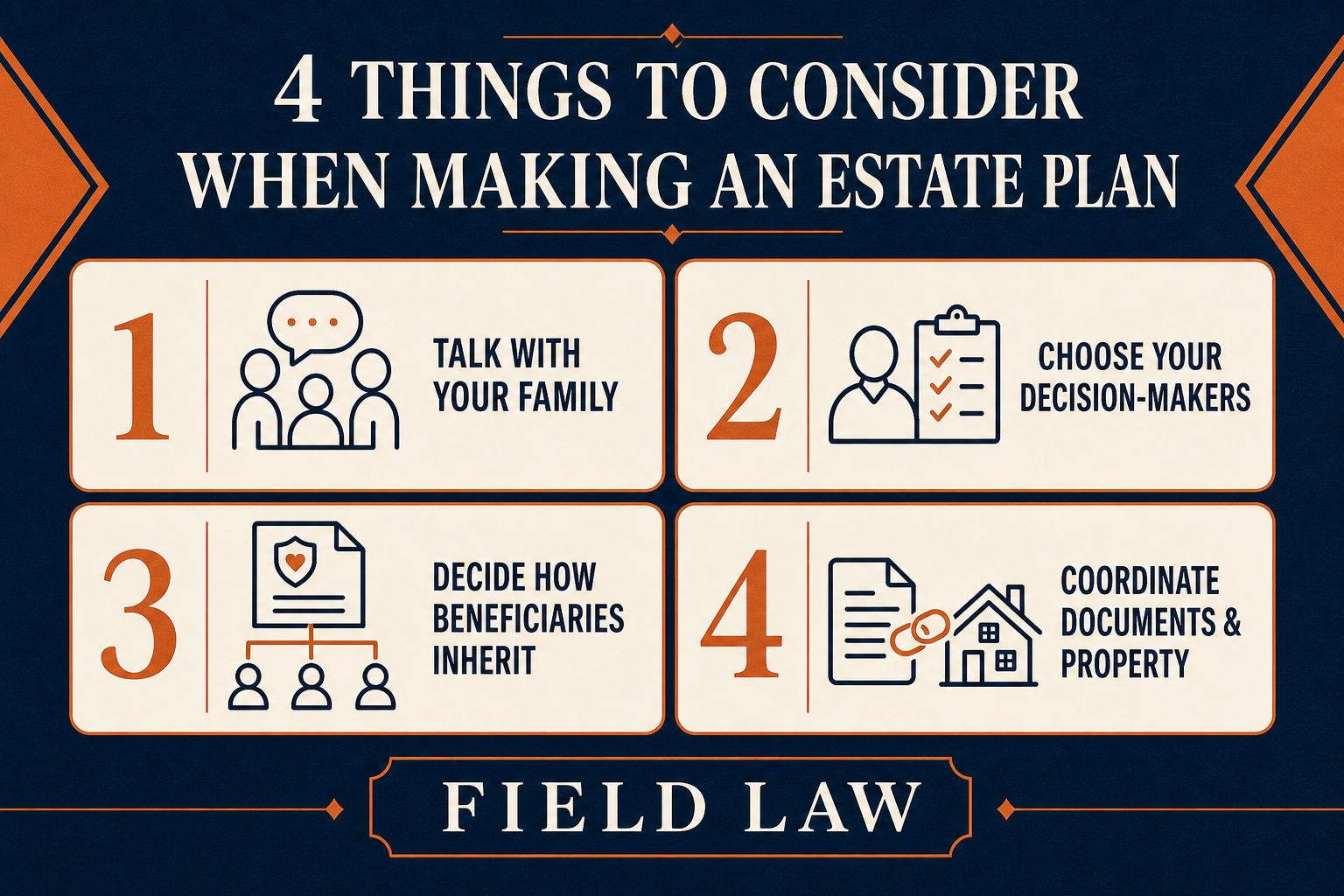
1. How Much Should Your Family Know About the Plan?
You are not required to tell relatives what they will inherit. In many families, keeping the details private is appropriate.
However, some communication can prevent confusion. At a minimum, the people expected to serve as executor, trustee, tutor, or mandatary should usually know that you are considering them for the role. They should also have an opportunity to decline.
You Do Not Have to Disclose Dollar Amounts
Discussing an estate plan does not require showing family members your financial statements or giving them exact inheritance amounts.
Instead, you might explain:
- Who will serve as executor
- Whether a trust will hold property
- Where original documents are stored
- Who should be contacted after a death
- Who has authority during incapacity
- Whether particular property has special instructions
- Who should care for minor children or pets
This information can help the right people respond during an emergency without revealing every detail of the plan.
Communication May Help Prevent Conflict
A discussion may be especially useful when the plan treats beneficiaries differently or makes an unexpected choice. For example, a parent may select one child as executor because that child lives nearby or has relevant experience—not because the parent favors that child.
Likewise, one beneficiary may receive property in trust while another receives property outright. Explaining the practical reason may reduce resentment later.
That does not mean every family meeting will be productive. When relationships are strained or a dispute is likely, the better approach may be careful drafting and a private explanation to the attorney.
Our article on talking to parents about estate planning discusses how families can begin these conversations.
Informal Explanations Do Not Replace Legal Documents
A conversation, letter, email, or list of wishes does not replace a valid will or trust.
If an informal statement conflicts with the legal document, the court will generally apply the enforceable document. Therefore, any important distribution instruction should appear in the will, trust, beneficiary designation, or other appropriate instrument.
2. Who Should Serve as Executor and Other Decision-Makers?
A last will and testament may nominate an executor to handle the succession. The executor may need to collect property, address debts, prepare a sworn descriptive list, communicate with beneficiaries, and complete court filings.
Not every succession requires a court-appointed executor. Some simple, uncontested successions can place the heirs or legatees into possession without an administration. Nevertheless, naming an executor gives the court and family a clear choice if an administration becomes necessary.
Qualities of a Good Executor
A good executor should be:
- Honest and dependable
- Organized
- Able to communicate with family members
- Willing to follow legal and financial advice
- Available to complete required tasks
- Capable of separating personal feelings from fiduciary duties
The executor does not need to be a lawyer or accountant. Attorneys, accountants, appraisers, and other professionals can assist with technical work.
Family dynamics can matter as much as financial knowledge. A person who is organized but openly hostile toward another beneficiary may not be the best choice.
Our guide to qualities to consider when choosing an executor provides additional guidance.
Name Backup Choices
The first person selected may die, become incapacitated, move away, or decline to serve. A will should generally name at least one alternate executor.
The same principle applies to trustees, tutors for minor children, and mandataries. Backup appointments can prevent the plan from depending entirely on one person’s availability.
Consider Independent Administration
A Louisiana will can authorize an executor to act independently. Under Louisiana Code of Civil Procedure Article 3396.2, the court must grant independent administration when the testament provides for it.
An independent executor can perform many succession tasks without obtaining a separate court order for every action. This may reduce delays and legal expenses.
Independent administration does not eliminate court supervision or the executor’s duties. However, including the authority in the will can make the eventual succession more efficient.
3. Should Beneficiaries Receive Property Outright or in Trust?
A trust is not automatically necessary for every estate plan. The more useful question is whether each beneficiary should receive complete control immediately.
An outright inheritance may work well for a financially responsible adult. A trust may be more appropriate when the beneficiary:
- Is a minor
- Has a disability
- Receives needs-based public benefits
- Struggles with financial decisions
- Has creditor concerns
- Is experiencing a divorce
- Has an addiction
- Should not receive a large inheritance at once
- Needs long-term management assistance
A trust can identify who manages the property, how it may be used, and when the beneficiary receives control.
Trusts for Minor Children
A minor cannot independently manage inherited property. Leaving property directly to a child may require a tutor or another court-supervised arrangement.
A testamentary trust created through a will can allow a selected trustee to manage the inheritance. The trust may authorize distributions for education, health, maintenance, and support. It can also continue after the beneficiary turns eighteen.
This allows the parent to choose both the trustee and the age or circumstances under which the child receives control.
Trusts for a Beneficiary With a Disability
An outright inheritance may interfere with a disabled beneficiary’s eligibility for certain needs-based benefits. A properly designed special-needs trust may allow property to supplement those benefits without giving the beneficiary unrestricted control.
The trust must be drafted for the particular beneficiary and the benefits involved. A generic form may not provide the intended protection.
Louisiana Forced Heirship Still Applies
Some descendants are forced heirs under Louisiana law. Louisiana Civil Code Article 1493 generally includes children who are twenty-three years old or younger at the parent’s death and children of any age who meet the statute’s permanent-incapacity requirements.
A forced heir is entitled to a reserved portion of the estate. However, Louisiana law may allow that portion to be placed in a properly structured trust.
Learn more about available trust options in our article on why trusts may be part of an estate plan.
4. How Will the Documents Coordinate With Your Property?
A will cannot control every asset merely because the asset appears on a list attached to the estate plan.
Some property passes according to ownership records, beneficiary designations, or contracts. Therefore, making an estate plan in Louisiana requires reviewing how each important asset will transfer.
Review Property Ownership
Determine whether property is:
- Community or separate
- Owned individually
- Co-owned with another person
- Owned by a trust
- Owned by a business
- Located outside Louisiana
Property classification can affect what portion you own and who may inherit it. For married clients, an account or asset titled in one spouse’s name may still be community property.
Review Beneficiary Designations
Life insurance, retirement accounts, annuities, and certain financial accounts may pass to a named beneficiary rather than under the will.
An outdated designation can undermine the estate plan. Common problems include:
- A former spouse remaining as beneficiary
- A deceased person still named
- A minor child named directly
- No alternate beneficiary
- A trust created in the estate plan but not named where appropriate
- One account divided differently from the rest of the estate
Beneficiary designations should be reviewed when the estate plan is created and after major life changes.
Plan for Incapacity
A will takes effect only after death. It does not authorize someone to manage property or make medical decisions during incapacity.
A complete plan should consider:
- A financial mandate
- A health-care mandate
- A living will
- Authorization to obtain medical information
- Instructions concerning long-term care
- Alternate decision-makers
Louisiana law requires certain powers to be granted expressly in a mandate. For example, Louisiana Civil Code Article 2997 requires express authority to make health-care decisions, accept or renounce a succession, make donations, borrow money, and perform several other significant acts.
Make Sure the Will Is Properly Executed
Even a carefully written will can create problems if it is not signed correctly.
Under Louisiana Civil Code Article 1576, a notarial testament must be written, dated, executed before a notary in the presence of two witnesses, and signed by the required parties.
Additional considerations apply when the testator cannot read, cannot sign, is visually impaired, or needs assistance during execution.
Estate Planning Requires Both Decisions and Implementation
Preparing the documents is only part of the process. The plan may also require changing beneficiary designations, transferring property to a trust, updating ownership records, or preserving original documents.
An estate plan that is never implemented may not produce the expected result. This is one of the reasons periodic reviews are important.
Field Law Can Help
Making an estate plan in Louisiana involves decisions about family communication, executors, beneficiaries, trusts, property, and incapacity. These decisions should work together rather than appearing in disconnected documents.
At Field Law, estate planning and successions are the focus of our practice. We help clients identify their goals, select the documents they actually need, and coordinate those documents with Louisiana property and inheritance law.
Contact Field Law to schedule a consultation and begin creating or updating your Louisiana estate plan.