|
|
Last
Modified on
Sep 11, 2026
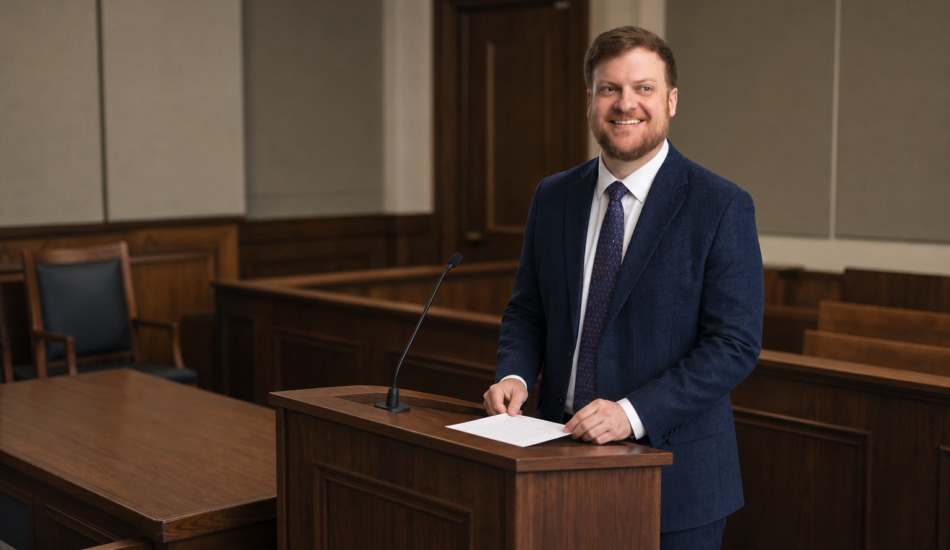
Field Law attorney Morgan Field represented the successful applicant in a Louisiana Supreme Court lost-will case that addressed whether an unsigned copy and witness affidavits could establish the validity of a missing notarial testament.
In In re: The Succession of Diana Bartlett Morgan, the Louisiana Supreme Court reversed the trial court and the Louisiana First Circuit Court of Appeal. The Court held that the evidence offered to probate the purported testament was insufficient and declared the testament absolutely null.
The decision provided important guidance about lost notarial testaments and the limits of using testimony to overcome missing signatures.
How the Succession Dispute Began
Diana Bartlett Morgan died in 2020. Her daughter, Diana Lynn Ford, petitioned to open the succession and alleged that her mother died intestate because an executed testament could not be located. The court appointed Ms. Ford as administratrix.
The decedent’s surviving spouse later sought to probate a lost notarial testament. He produced an unsigned, typewritten copy that was stamped to indicate that the original had been kept in the drafting attorney’s safety deposit box. However, a search of the box did not locate the original.
The unsigned copy did not contain the signatures of:
- The decedent
- Either testamentary witness
- The notary
The surviving spouse also submitted affidavits from himself, the drafting attorney, and the two witnesses. Those affidavits stated that the unsigned document accurately reflected the missing testament and that the original had been properly executed.
The trial court admitted the unsigned copy for probate. It then removed Ms. Ford as administratrix and confirmed the surviving spouse as independent executor.
The First Circuit Affirmed the Trial Court
The First Circuit affirmed the trial court. It distinguished between an original testament that was defective on its face and a lost original testament whose prior existence and execution were being established through outside evidence.
Under the First Circuit’s reasoning, the unsigned copy and affidavits could be considered together as proof that a valid original testament once existed.
Ms. Ford then sought review from the Louisiana Supreme Court. The Court granted her writ application and heard the case under docket number 2022-C-01763.
The Louisiana Supreme Court Reversed
On September 8, 2023, the Louisiana Supreme Court reversed the lower courts in In re: The Succession of Diana Bartlett Morgan.
At the time the testament was allegedly executed, Louisiana law required a notarial testament to be signed by the testator on each page and at the end. The notary and two witnesses also had to sign the attestation clause.
The central question was whether the unsigned copy and narrative affidavits were sufficient to prove that the missing original complied with those formal requirements.
The Supreme Court held that they were not.
A duplicate is a counterpart produced through photography, electronic imaging, or a similar method that accurately reproduces the original. Because the document offered for probate did not reproduce any of the signatures allegedly appearing on the original, it was not a duplicate of the executed testament.
The Court also rejected the argument that testimony alone could establish compliance with the formal requirements. It explained that the rules permitting other evidence of a lost writing did not create an independent method of proving the formal execution of a notarial testament.
Accordingly, the Supreme Court reversed the trial court and First Circuit. It declared the purported testament absolutely null.
What the Supreme Court’s Decision Established
The decision drew an important distinction between proving the contents of a missing document and proving that a valid notarial testament was executed.
The affidavits may have described what the witnesses remembered. However, they could not convert an unsigned draft into a duplicate of the executed testament.
The Court emphasized that Louisiana’s testamentary formalities served an important protective function. Signatures help guard against mistake, fraud, undue influence, and uncertainty about whether a document represents the testator’s final wishes.
The Court therefore declined to allow after-the-fact affidavits to substitute for the signatures that the governing law required.
Several justices wrote separately, and the Chief Justice dissented. The dissent argued that the majority had departed from earlier jurisprudence permitting the contents and execution of a lost testament to be established through outside evidence. Nevertheless, the majority opinion controlled the outcome and resulted in a reversal for Field Law’s client.
The 2025 Testament Revisions Did Not Change This Rule
Louisiana revised several rules governing notarial testaments in 2025. Those revisions did not change the Louisiana Supreme Court’s holding in Succession of Morgan.
Act 30 of 2025 amended the formal requirements for notarial testaments and created new procedures for proving a testament that is produced in court but is not self-proving. Under current Louisiana Code of Civil Procedure Article 2887, testimony may establish the execution of certain non-self-proving notarial testaments.
That is a different issue from attempting to probate a lost original through an unsigned copy.
The 2025 legislation did not amend the Louisiana Code of Evidence provisions governing originals, duplicates, and other evidence of a writing’s contents. It did not change the requirement recognized in Succession of Morgan that a party seeking to probate a lost notarial testament must produce a true duplicate that accurately reproduces the executed original.
An unsigned draft or unsigned copy is not a duplicate of the executed testament because it does not reproduce the testator’s, witnesses’, and notary’s signatures. After-the-fact affidavits stating that the missing original was properly signed cannot transform that unsigned document into a duplicate.
Article 2887 addresses how a notarial testament that has been produced may be proved when it is not self-proving. It does not create a new method for replacing a lost original with an unsigned copy and narrative affidavits.
Accordingly, the 2025 revisions did not overrule, narrow, or otherwise alter the rule established by the Louisiana Supreme Court in Succession of Morgan. The decision remains controlling authority on the evidence required to probate a lost Louisiana notarial testament.
Practical Lessons From the Louisiana Supreme Court Lost-Will Case
The case offers several practical lessons for Louisiana families and attorneys.
Preserve the Original Testament
A photocopy or electronic scan can help identify the intended provisions. However, an ordinary copy is not necessarily a legal substitute for the original.
The testator should know where the original is stored and make sure the intended executor knows how to locate it after death.
Consider Executing a Duplicate Original
A duplicate original is not merely a photocopy. It is another original instrument signed with the required formalities.
Properly executed duplicate originals stored in separate secure locations may reduce the risk that a fire, flood, relocation, or other event will leave the family without an executed testament.
Review Older Louisiana Wills
The 2025 legislation changed the formal and procedural rules governing notarial testaments. An older will may remain valid, but questions can arise about whether it is self-proving and what evidence would be needed for probate.
Reviewing the document while the testator, notary, and witnesses remain available is usually easier than litigating those questions after death.
Do Not Assume an Affidavit Can Cure Every Defect
Affidavits and witness testimony may help prove a non-self-proving testament that has been produced under Article 2887. They do not eliminate the separate evidentiary requirements that apply when the original testament is lost.
Obtain Advice Before Relying on a Copy
A missing original does not always produce the same result. The form of the testament, nature of the available copy, location where the original was stored, evidence of revocation, and applicable law all matter.
Anyone who finds a questionable will also should understand the obligation to produce it. Read If You Find a Will and Think It Is Invalid, Do You Still Have to File It? for more information.
Appellate Experience in Louisiana Succession Litigation
Succession disputes are often decided through detailed questions of statutory interpretation, testamentary form, evidence, and procedure. A party who loses in the trial court may need to preserve objections, build an adequate record, and identify the precise legal issue for appellate review. Learn about Field Law’s Louisiana succession appeals services.
In Succession of Morgan, Field Law continued representing its client after an adverse ruling in the trial court and an affirmance by the First Circuit. The Louisiana Supreme Court ultimately accepted the client’s writ application, reversed the lower courts, and rendered judgment declaring the purported testament absolutely null.
Our article What Is Succession Litigation in Louisiana? explains other disputes that may require contested proceedings.
Field Law Can Help With Contested Louisiana Successions
A dispute involving a lost, copied, or potentially invalid testament can determine who controls the succession and who ultimately receives the estate.
Morgan Field and Field Law represent heirs, legatees, executors, administrators, and other interested parties in Louisiana succession disputes, including matters involving the validity and probate of testaments. Field Law also assists clients with evaluating existing wills before a preventable problem becomes litigation.
Contact Field Law to discuss a Louisiana will or succession dispute.