|
|
Last
Modified on
Aug 02, 2026
A Louisiana probate-avoidance trust can provide continuity during incapacity and reduce the property that must pass through a judicial succession. However, the name can be misleading. Louisiana law does not establish a special category called a “probate-avoidance trust.” Instead, the phrase generally describes a revocable inter vivos trust that has been properly funded as part of a broader estate plan.
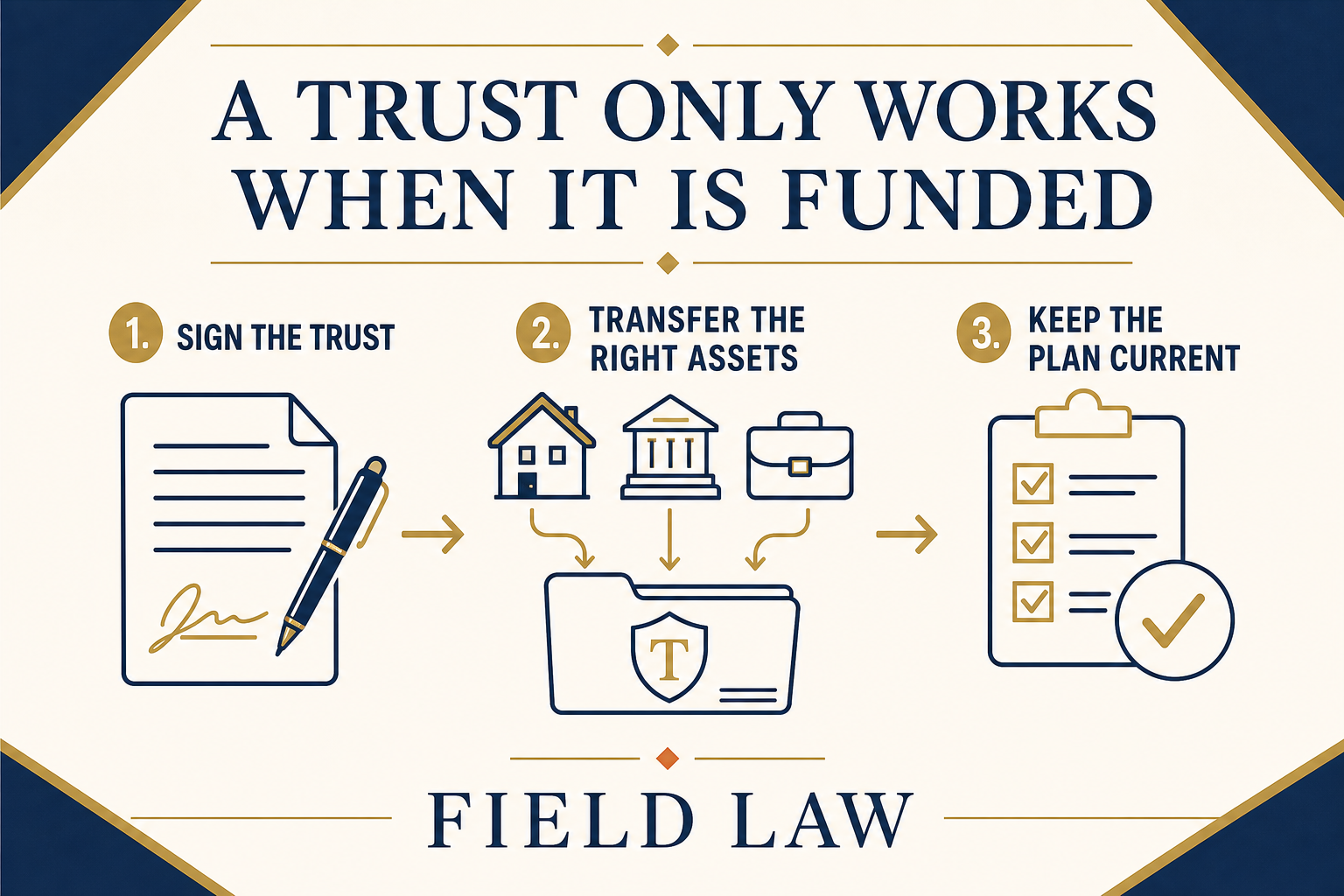
The distinction matters. Merely signing a trust does not remove property from a future succession. The person creating the trust must transfer the appropriate assets into it and keep the plan current.
What Is a Louisiana Probate-Avoidance Trust?
Under Louisiana Revised Statute 9:1731, a trust results from the transfer of property to a trustee, who administers that property as a fiduciary for a beneficiary.
In a typical revocable trust plan, the person creating the trust may also serve as the initial trustee and beneficiary. That person continues managing the trust property during life. The trust agreement then identifies a successor trustee who can step in after the settlor’s incapacity or death.
Because the settlor generally retains the right to amend or revoke the trust, the arrangement can remain flexible as the settlor’s family, finances, and estate-planning goals change.
Funding the Trust Is the Critical Step
A trust can avoid succession only for property that the trust actually owns. Therefore, funding—not merely signing the document—determines whether the plan works.
Depending on the estate, funding may include:
- Executing and recording documents that transfer Louisiana real estate to the trust;
- Retitling appropriate bank and investment accounts;
- Assigning certain business or LLC interests after reviewing the governing documents;
- Assigning appropriate items of personal property; and
- Coordinating assets that pass through beneficiary designations.
Louisiana law imposes specific recordation requirements when a trust owns immovable property. Louisiana Revised Statute 9:2092 addresses the recording of a trust instrument or trust extract affecting immovable property.
Before transferring a home or other real estate, the settlor should also consider the mortgage, insurance coverage, homestead exemption, and other title issues. In addition, retirement accounts generally should not be retitled in the name of a revocable trust during the owner’s lifetime. Instead, the estate plan should coordinate the account’s beneficiary designation with the trust and the rest of the plan.
How Can a Louisiana Probate-Avoidance Trust Help?
It May Reduce the Need for Judicial Succession
Property titled in a properly administered trust does not become part of the settlor’s succession estate merely because the settlor dies. Instead, the successor trustee continues administering the property under the trust agreement.
This feature can be particularly helpful when someone owns real estate in multiple parishes or states, has a complex investment portfolio, or wants assets managed for beneficiaries over an extended period.
However, a trust does not guarantee that the family will avoid succession completely. A succession may still be necessary for assets left outside the trust, unresolved creditor claims, omitted property, or disputes concerning the estate or trust.
For more information about the relationship between trusts and succession, read How Trusts Help an Estate Bypass Probate.
It Can Provide Continuity During Incapacity
A properly drafted trust can allow a successor trustee to manage trust-owned property if the settlor becomes unable to do so. This may prevent delays in paying expenses, managing investments, maintaining real estate, or operating a business.
Even so, a trust does not replace every other incapacity-planning document. A successor trustee controls only the property held by the trust. A properly drafted Louisiana contract of mandate may still be necessary for nontrust assets and other financial or personal matters.
It May Provide Greater Privacy
A judicial succession can place pleadings, asset descriptions, valuations, and distribution information in a court record. A trust may keep many of its dispositive provisions and financial details outside that record.
The privacy is not absolute. For example, documents concerning trust-owned real estate may appear in public conveyance records. Litigation involving the trust can also make information public. Nevertheless, a funded trust may keep more family and financial information private than a traditional judicial succession would.
It Can Control How Beneficiaries Receive Property
A trust can do more than transfer property at death. It can establish how and when beneficiaries receive or use their inheritance.
For example, a trust may hold property for:
- Minor children;
- A beneficiary who needs financial guidance;
- A person with creditor or divorce concerns;
- A family member with a disability;
- Children from a previous relationship; or
- An unmarried partner whom Louisiana intestacy law would not protect.
This continued management may offer beneficiaries meaningful protection. However, the trust language and the beneficiary’s rights will determine how much protection the arrangement actually provides.
What Does a Revocable Trust Not Do?
A revocable trust has important limits.
First, it generally does not shield the settlor’s property from the settlor’s own creditors. Because the settlor retains control and can revoke the trust, the assets ordinarily remain available to satisfy valid claims against the settlor.
Likewise, transferring property to a standard revocable trust does not automatically protect that property for Medicaid eligibility purposes.
A revocable trust also does not automatically reduce estate or income taxes. Its primary value usually lies in management, continuity, privacy, and the potential reduction of judicial succession work—not in creating a special tax exemption.
Finally, a trust does not guarantee lower overall costs. Creating, funding, and administering the trust involves expense. Whether it ultimately saves money depends on the property involved, the family’s circumstances, and how well the trust is maintained.
Does Everyone Need a Probate-Avoidance Trust?
No. A Louisiana probate-avoidance trust can be valuable, but it is not the best answer for every estate.
A trust may deserve serious consideration when someone:
- Owns real estate in more than one state;
- Wants continuity if incapacity occurs;
- Values financial privacy;
- Has a blended family or unmarried partner;
- Owns a business or complex investments; or
- Wants an inheritance managed for beneficiaries instead of distributed immediately.
On the other hand, a will, beneficiary designations, and a contract of mandate may adequately address a simpler estate. Some families may also qualify to use a Louisiana small-succession affidavit instead of opening a judicial succession. Louisiana’s general small-succession threshold increased to $200,000 effective August 1, 2026, as explained in our article about Louisiana Act 293.
A Trust Should Be Part of a Coordinated Estate Plan
Even a well-funded trust usually works alongside other documents. The complete plan may include a pour-over will, contract of mandate, medical documents, beneficiary designations, and instructions for property that cannot or should not be transferred to the trust.
The plan also requires follow-through. Buying new property, opening accounts, refinancing real estate, changing business interests, or experiencing a major family change may require updates. Failing to maintain the trust is one of several common estate-planning mistakes to avoid.
Field Law Helps Carry the Plan Through Funding
Signing a trust is only the beginning. A Louisiana probate-avoidance trust works as intended only when the appropriate property is properly transferred and titled in the trust’s name.
After signing, Field Law works with clients to identify the assets that should fund the trust and the steps required for each asset. Depending on the plan, that may include preparing and recording documents transferring Louisiana real estate, providing instructions for retitling financial accounts, assisting with assignments of business or personal-property interests, and reviewing beneficiary designations that must be coordinated with the trust rather than retitled.
We also help clients distinguish between property that belongs in the trust and property—such as certain retirement accounts—that generally should remain in the owner’s individual name. The goal is to reduce the risk that an overlooked succession asset will later require unnecessary court proceedings.
A trust must also stay current. When a client acquires new real estate, opens a significant account, refinances property, changes business interests, or experiences a major family change, Field Law can review whether additional funding or estate-planning updates are necessary.
If you want a Louisiana probate-avoidance trust that is both properly drafted and supported through the funding process, contact Field Law to schedule a consultation.