|
|
Last
Modified on
Aug 02, 2026
Passing a business to your children involves more than naming them in a will. A business has ownership rights, management authority, contracts, employees, debts, tax attributes, and relationships that must continue after the transfer.
Before signing transfer documents, decide who should own the business, who should control it, and when the transfer should occur. These three tips can help Louisiana business owners build a workable plan.
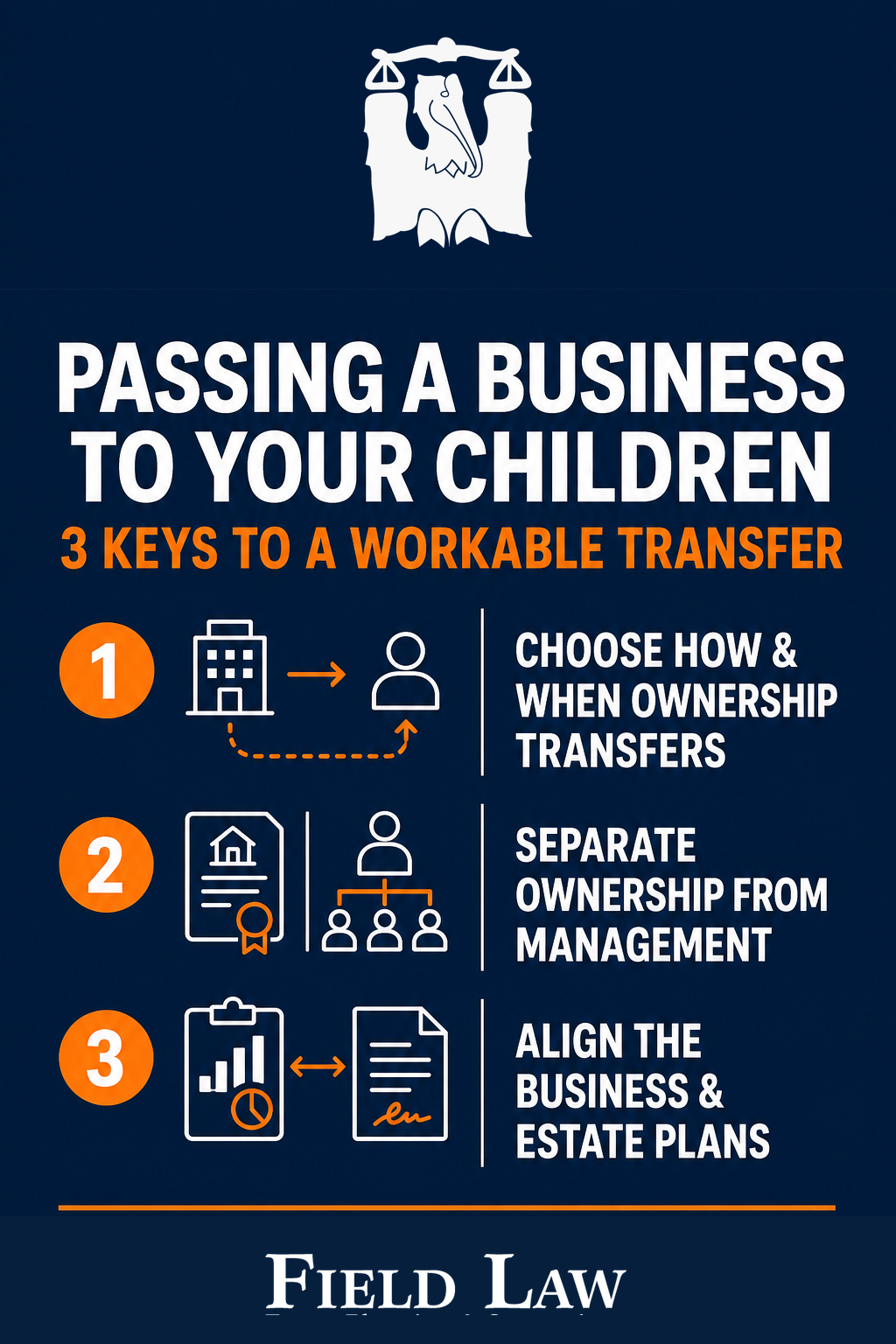
1. Choose How and When to Transfer Ownership
First, decide whether your children should receive the business during your lifetime or after your death.
Common options include:
- Giving part of the business to a child;
- Selling ownership through a lump-sum or installment sale;
- Transferring ownership gradually;
- Leaving the business through a will;
- Placing the business interest in a trust; or
- Combining several methods.
Each option creates different results. For example, a lifetime gift may reduce your ownership but may not provide the income you need for retirement. A sale can produce income, but the child must have enough cash or financing to complete it. An inheritance allows you to retain control during life, but the business may enter a Louisiana succession unless you use and properly fund another planning structure.
Tax basis also matters. A person who receives property as a gift often receives the donor’s existing tax basis. In contrast, inherited property generally receives a basis tied to its fair market value at death. The IRS explains these basis rules in Publication 551.
A transfer for less than full value may also count as a gift for federal tax purposes. The IRS defines a gift as a direct or indirect transfer for which the owner does not receive full consideration. Its gift-tax guidance also explains why larger or more complicated transfers may require help from attorneys, tax professionals, and appraisers.
Therefore, obtain a defensible business valuation before making a major transfer. A professional valuation can support the purchase price, gift-tax reporting, and an equitable plan for children who will not receive the business.
2. Separate Ownership From Management
Next, decide whether every child who receives an economic interest should also have management authority.
Those two rights are not always the same. One child may have worked in the company for 15 years, while another chose a different career. Giving both children equal control can create a deadlock even if equal economic treatment seems fair.
A business owner might instead:
- Give voting control to the child who operates the company;
- Give nonvoting interests to other children;
- Leave the business to one child and other property to the remaining children;
- Require the active child to purchase the others’ interests;
- Use life insurance to help equalize inheritances; or
- Create a trust with carefully defined management and distribution terms.
Louisiana LLC law makes the distinction especially important. Under Louisiana Revised Statute 12:1332, a person who receives an LLC interest does not necessarily become a member or gain management rights. The articles of organization and written operating agreement can establish different rules.
As a result, a will cannot safely carry the entire plan by itself. Review the operating agreement, shareholder agreement, buy-sell agreement, and any transfer restrictions before deciding how to divide the business.
A strong agreement should also address what happens if an owner dies, becomes incapacitated, divorces, files bankruptcy, wants to leave the company, or stops working there. It should explain who may purchase the interest, how the parties will determine its value, and how the purchaser will pay for it.
Louisiana does not require every adult child to receive an equal inheritance. However, the plan must account for Louisiana’s forced-heirship rules if an owner has a child who qualifies as a forced heir.
3. Make the Business Plan and Estate Plan Match
Finally, coordinate the company’s governing documents with your personal estate plan.
Review the following documents together:
- Your will or trust;
- The LLC operating agreement or corporate documents;
- Any buy-sell agreement;
- Life insurance policies;
- Ownership records;
- Your contract of mandate; and
- Your personal and business succession plans.
For example, your will might leave the company to one child while the operating agreement gives the remaining owners the right to purchase your interest after death. If no one identifies that conflict, the child may receive cash from a sale rather than ownership of the business.
Likewise, signing a trust does not transfer the business into it. You must complete the ownership documents and update the company’s records. Our article about how trusts can help an estate bypass succession explains why proper funding matters.
The plan should also address incapacity. A carefully drafted contract of mandate can identify who has authority to exercise ownership rights if you cannot act. Meanwhile, the company’s governing documents should explain who will manage daily operations during an emergency.
Once the legal structure is in place, prepare the next generation for leadership. Our articles about preparing children to take over a family business and moving from founder to successor address training, communication, and the gradual transfer of responsibility.
Field Law Can Help
A successful transfer must protect the business, the retiring owner, and the family members involved. Field Law helps Louisiana business owners coordinate operating agreements, buy-sell terms, trusts, wills, mandates, and business succession plans.
If you want to pass a business to your children or begin planning for a future transition, contact Field Law to schedule a consultation.