
Baton Rouge Blended Family Estate Planning Lawyer
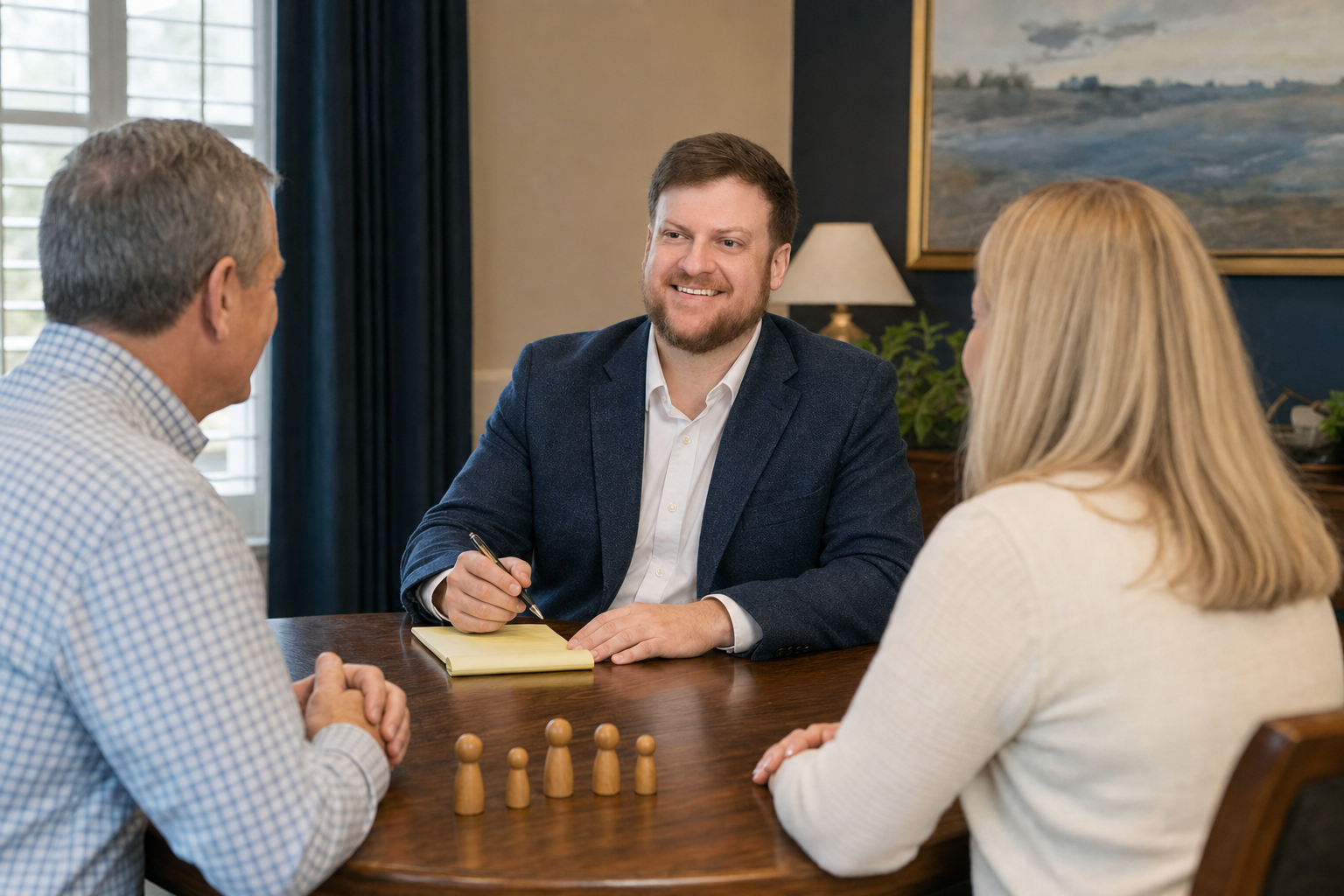
Baton Rouge Blended Family Estate Planning Attorney
Blended families often need more deliberate estate planning. Louisiana’s default inheritance rules may not produce the result a couple expects.
A plan can support a surviving spouse while preserving an inheritance for children from a prior relationship. Without clear documents, those goals can conflict.
Field Law helps Baton Rouge families replace assumptions with coordinated Louisiana Wills, trusts, usufructs, mandates, and beneficiary designations.
A blended family may include shared children, children from earlier relationships, stepchildren, adopted children, or grandchildren with different legal relationships to each spouse. Those relationships matter under Louisiana succession law.
A Baton Rouge blended family estate planning attorney can identify who inherits under the default rules. We can then build a plan around the family’s actual priorities.
Depending on the circumstances, that plan may use a Louisiana Last Will and Testament, usufruct, trust, beneficiary designations, or several tools together.
Clear documents cannot guarantee that relatives will never disagree. They can reduce avoidable uncertainty and provide useful instructions during incapacity and the eventual Louisiana succession process.
Why Blended Families Need Louisiana-Specific Planning
Louisiana intestate succession law applies when someone dies without a valid Will covering the property. The result depends on property classification and the surviving relatives.
The law recognizes legal relationships. It does not necessarily follow the emotional relationships within a family.
Surviving Spouse
Marriage does not always mean the surviving spouse inherits everything.
The spouse keeps the spouse’s community share. Rights in the deceased spouse’s share depend on descendants, property type, and the estate plan.
Children
Biological and legally adopted children are descendants for succession purposes.
They may inherit community or separate property under the applicable intestate rules.
Stepchildren
An unadopted stepchild does not ordinarily inherit from a stepparent through intestate succession.
A Will, trust, or beneficiary designation can create the intended inheritance.
When a married person dies with descendants, the decedent’s community interest generally passes to the descendants. The surviving spouse generally receives a legal usufruct over that interest.
Separate property follows different rules and may pass directly to descendants. These results can create divided ownership between a spouse and the deceased spouse’s children.
Leaving Everything to a Spouse Does Not Preserve the Remainder for Your Children
An outright gift gives the surviving spouse control of the property. That spouse may spend, sell, donate, retitle, or leave it to someone else.
If you want to support a spouse and preserve property for children, the plan needs enforceable terms.
Balancing Support for a Spouse With an Inheritance for Children
Support the Surviving Spouse
- Provide a place to live.
- Provide income or access to funds.
- Allow practical management of property.
- Address care and incapacity.
Protect the Children’s Inheritance
- Identify the property to preserve.
- Name the children or their trusts.
- Set rules for management and distribution.
- Choose a reliable fiduciary.
Planning Tools for a Louisiana Blended Family
Last Will and Testament
A Louisiana Will can divide property, nominate an executor, and create trusts or usufructs.
It should address property classification, beneficiary designations, forced heirs, and gifts that do not otherwise pass.
Usufruct Planning
A usufruct may let a spouse use property while children hold the naked ownership.
The plan should define duration, expenses, security, management powers, and authority to sell or reinvest.
Testamentary Trust
A Will can create a Louisiana testamentary trust for a spouse and children.
The trustee can manage a home, investments, business interests, and distributions under written standards.
Inter Vivos Trust
An inter vivos trust begins during the settlor’s lifetime. It may help manage property during incapacity.
Transferring assets into the trust may keep them outside the succession. Signing the trust without funding it accomplishes little.
Beneficiary Designations and Ownership Still Matter
Life insurance, retirement accounts, and certain financial accounts may pass under beneficiary designations instead of the Will.
Naming a spouse may provide immediate support but preserve nothing for children. Naming minor children directly can create management problems.
Review every designation and ownership arrangement as part of the blended-family plan.
Forced Heirship in a Blended Family
Louisiana forced-heirship law may restrict the portion that can pass to a spouse, stepchild, trust, or other beneficiary.
Forced heirs generally include certain first-degree descendants age 23 or younger. Descendants of any age may also qualify because of permanent incapacity or infirmity.
A forced heir receives a reserved portion called the legitime unless legally disinherited for just cause.
Planning for Incapacity
A spouse, child, or stepchild does not automatically have unrestricted authority over another adult’s property or accounts.
A Louisiana general mandate can authorize financial and property decisions.
A separate health care mandate can name the person who will make medical decisions.
Some clients choose a spouse. Others select an adult child, professional, or another trusted person.
Reducing the Risk of Blended-Family Succession Disputes
Contested successions often begin with missing, outdated, inconsistent, or unclear documents. Common problems include:
- A Will conflicts with beneficiary designations.
- The family assumes a spouse or stepchild inherits automatically.
- Property enters direct co-ownership without a management plan.
- The family signed a trust but never funded it.
- Usufruct or trustee powers remain unclear.
- The plan ignores forced heirship.
- Fiduciary appointments are outdated.
- Family promises never became enforceable documents.
A coordinated plan cannot prevent every disagreement. It can replace assumptions with written instructions.
If a dispute arises, Field Law also represents clients in contested Louisiana successions and estate disputes.
Frequently Asked Questions About Blended-Family Estate Planning
Does My Spouse Automatically Inherit Everything in Louisiana?
No. The answer depends on the property type, descendants, estate plan, beneficiary designations, trusts, and other arrangements.
Our guide explains whether you can leave everything to your spouse in Louisiana.
Do Stepchildren Automatically Inherit in Louisiana?
An unadopted stepchild ordinarily does not inherit from a stepparent through intestate succession. A valid planning document can create that inheritance.
Can I Support My Spouse and Protect an Inheritance for My Children?
Often, yes. A plan may use a usufruct, trust, specific gifts, beneficiary designations, or several arrangements together.
Will a Trust Avoid a Louisiana Succession?
An inter vivos trust may keep trust-owned property outside the settlor’s succession. The settlor must actually transfer the property into the trust.
A Will creates a testamentary trust. The succession representative generally transfers the designated property into it after death.
When Should You Review a Blended-Family Estate Plan?
Review it after marriage, divorce, a new child, a death, incapacity, relocation, a property change, or a changed family relationship.
Review beneficiary designations and ownership arrangements at the same time.
Schedule a Free Consultation With a Baton Rouge Blended Family Estate Planning Lawyer
Field Law assists blended families with Wills, trusts, usufruct planning, beneficiary designations, mandates, and successions.
We can help you address support, inheritance, incapacity, and the eventual administration of your estate.

© 2026 Field Law. All rights reserved.
Responsible Attorney: James Morgan Field, III, Louisiana Bar Roll No. 34285. Attorney Morgan Field is listed with the Louisiana State Bar Association under his full name.
*Images are obtained under license from Canva and other third-party stock image providers, with attribution included where required.
Digital Marketing By 