|
|
Last
Modified on
Aug 02, 2026
Estate planning is not limited to deciding who receives your property after your death. A complete Louisiana estate plan can also address who will manage your financial affairs during incapacity, who may make health-care decisions for you, who should care for minor children, and how property should be managed for beneficiaries who are not ready to receive it outright.
Unfortunately, misconceptions about estate planning cause many people to postpone these decisions. Here are four common myths—and what Louisiana residents should understand instead.
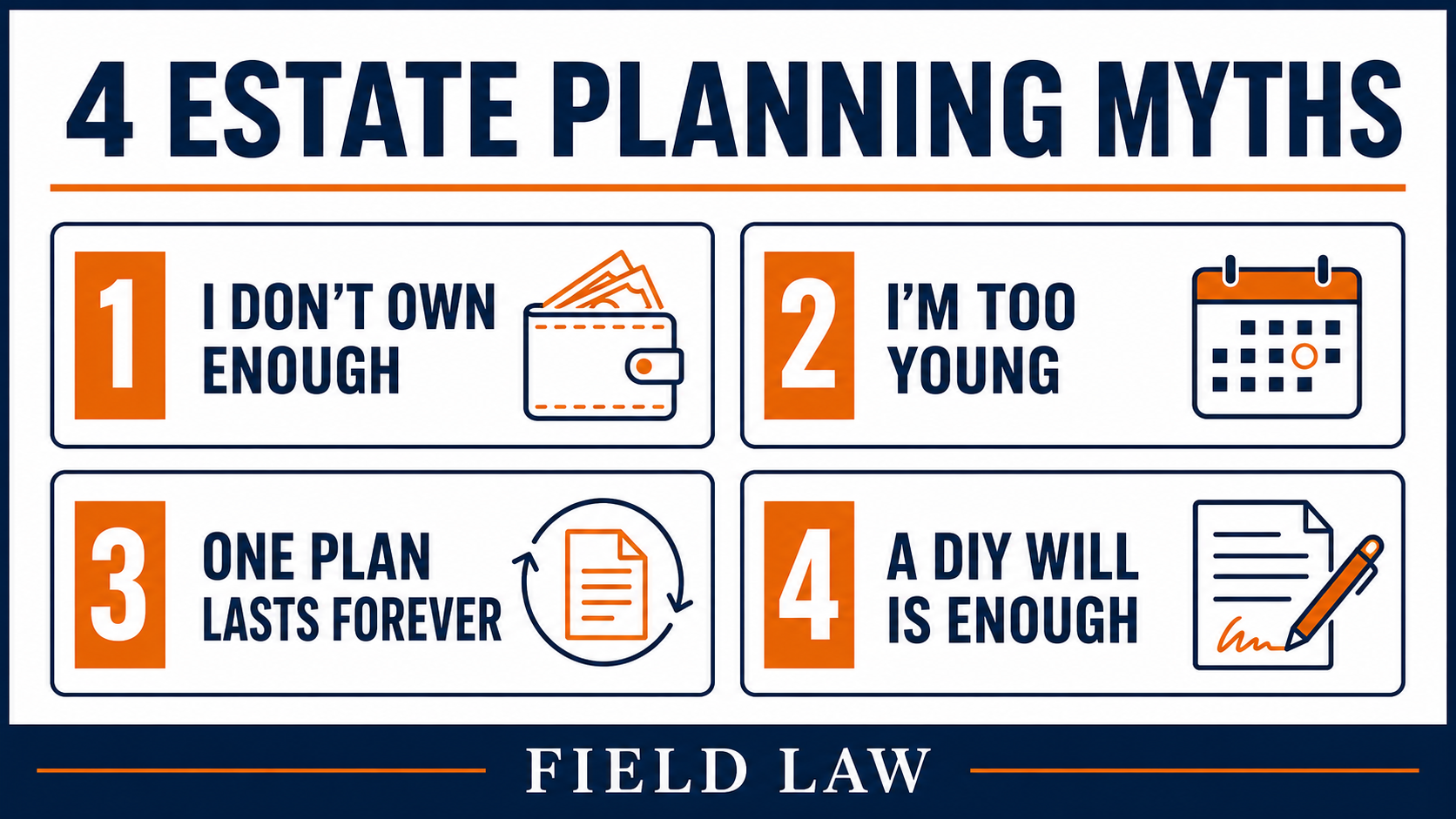
Myth #1: You Do Not Need a Will Unless You Own a Lot of Property
Truth: The value of your property is only one reason to prepare a will.
If you die without a valid will, Louisiana’s intestate-succession laws determine who inherits the property governed by your succession. Under Louisiana Civil Code article 880, property not disposed of by a valid testament passes by operation of law to specified relatives and, in certain circumstances, a surviving spouse.
That legal order may not produce the result you expect. Depending on whether property is separate or community property and which relatives survive you:
- Your spouse may not receive full ownership of your property.
- Separate property may pass to children or other relatives instead of a spouse.
- Children may receive ownership subject to a surviving spouse’s usufruct.
- An unmarried partner ordinarily will not inherit through intestacy.
- Property may pass to relatives with whom you have little or no relationship.
A will can also do more than divide valuable assets. It can name an executor, nominate a tutor for minor children, create trusts for young beneficiaries, address particular items of sentimental property, and document intentional decisions concerning family members.
A will does not necessarily control assets governed by a beneficiary designation, survivorship provision, or trust. Those arrangements should be reviewed as part of the overall plan so they work together.
For a more detailed explanation, read what happens when someone dies without a will in Louisiana.
Myth #2: Estate Planning Is Only for Older Adults
Truth: Any adult can benefit from planning for incapacity and unexpected events.
Once a child becomes a legal adult, parents do not retain comprehensive authority to access the child’s financial accounts, speak for the child in every medical situation, or sign legal documents on the child’s behalf. Similar problems can affect married couples when one spouse becomes unable to manage individually owned property or financial accounts.
A younger adult’s estate plan may be relatively simple, but it can still include:
- A financial power of attorney, known in Louisiana as a contract of mandate
- A health-care power of attorney
- An advance directive concerning life-sustaining treatment
- A will
- Appropriate beneficiary designations
- Instructions for accessing important accounts and records
Louisiana law generally provides that a contract of mandate continues through the principal’s incapacity unless the document provides otherwise. However, the mandate must actually grant the authority needed. Learn more about how a Louisiana contract of mandate protects your interests.
Young parents have additional reasons to plan. A will can nominate the person they want considered as tutor for a minor child, while a trust can prevent a young beneficiary from receiving an inheritance outright before being prepared to manage it.
Estate planning is based on responsibility and relationships—not simply age or wealth.
Myth #3: You Create an Estate Plan Only Once
Truth: An estate plan should change when your life, property, or goals change.
You do not need to replace every document each year. However, you should review your plan periodically and after a significant event, such as:
- Marriage or divorce
- The birth or adoption of a child
- The death or incapacity of a beneficiary, executor, trustee, or mandatary
- A meaningful change in assets or debts
- The purchase or sale of a business
- The acquisition of property in another state
- A serious diagnosis or change in health
- A breakdown in a family relationship
- A move to or from Louisiana
- A change in tax or estate-planning law
Some life events may have legal effects on existing documents, but you should not assume that the law will automatically revise every part of your plan in the way you would want.
A review should include more than the will. Powers of attorney, health-care documents, trusts, life-insurance designations, retirement accounts, payable-on-death accounts, and property titles may all need attention.
Even when the documents remain legally valid, the people you selected years ago may no longer be the appropriate people to carry out your wishes. Regular reviews help identify these common estate planning mistakes before they create problems.
Myth #4: Writing Your Own Will Is Always Simple and Safe
Truth: Louisiana recognizes wills prepared without an attorney, but technical validity is only part of the problem.
Louisiana currently recognizes two forms of testament: olographic and notarial. An olographic will must be entirely written, dated, and signed in the testator’s handwriting under Louisiana Civil Code article 1575. A notarial will must satisfy the execution requirements in Louisiana Civil Code article 1576, including execution before a notary and two witnesses.
These provisions were amended in 2025, making current Louisiana-specific information especially important.
Even when a homemade or online will satisfies the formal signing requirements, it may still create unintended results. Common problems include:
- Failing to distinguish between separate and community property
- Using terms that do not clearly identify beneficiaries or property
- Giving away property the testator does not own individually
- Failing to account for forced-heirship rules
- Naming beneficiaries without planning for what happens if one dies first
- Leaving property directly to a minor or financially vulnerable beneficiary
- Creating conflicts between the will and beneficiary designations
- Attempting to authorize actions that cannot be accomplished through a will
- Making handwritten additions or corrections improperly
A document can be technically valid while still failing to accomplish the testator’s actual goals. Legal advice is particularly important when the plan involves minor children, a blended family, an unmarried partner, estranged relatives, a business, property in more than one state, a beneficiary with disabilities, or a potential family dispute.
Read more about why you should consider drafting a will even if you do not own substantial property.
Field Law Can Help You Build a Louisiana Estate Plan
Estate planning does not have to be overwhelming, and it is not reserved for older or wealthy families. A well-prepared plan can protect you during incapacity, provide clear instructions after death, and make difficult circumstances easier for the people you care about.
Field Law helps individuals and families throughout Louisiana prepare and update wills, trusts, contracts of mandate, health-care powers of attorney, and advance directives. We can review how your property is owned, identify gaps between your documents and beneficiary designations, and prepare a plan tailored to your family and goals.
To discuss creating or updating your Louisiana estate plan, contact Field Law to schedule a consultation.