Denham Springs Trusts Lawyer

Home /  Denham Springs Trusts Lawyer

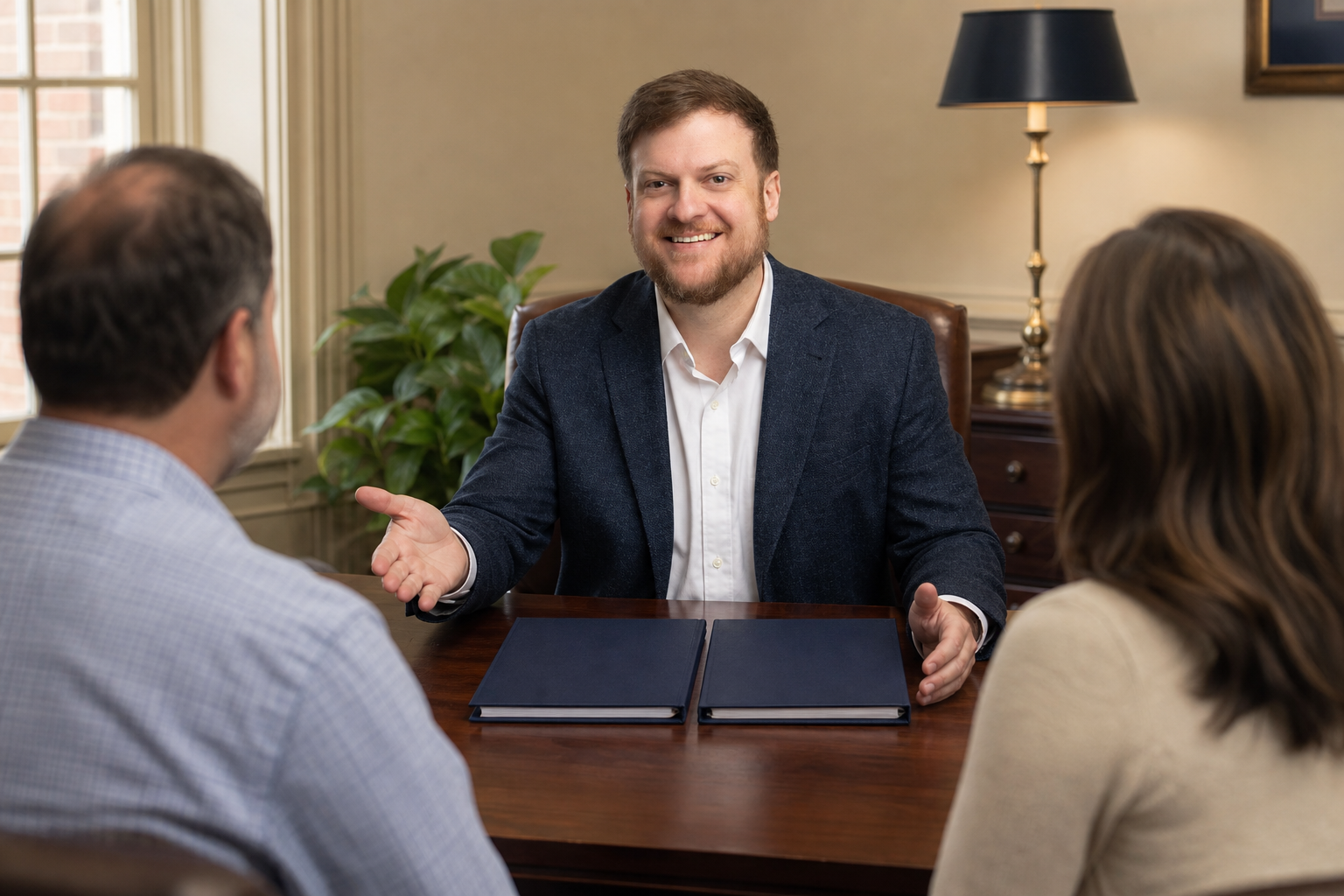
Denham Springs trusts lawyer discussing a Louisiana trust with a Livingston Parish couple

Denham Springs Trusts Lawyer

Table of Contents

Trust Planning for Livingston Parish Families

A Louisiana trust can provide continuing property management, protect an inheritance, or help properly transferred assets avoid succession.

The trust document is only the beginning. The plan must also address deeds, financial accounts, beneficiary designations, trustees, and property that should remain outside the trust.

Field Law helps Denham Springs and Livingston Parish families create trusts with defined purposes, workable terms, and practical funding plans.

A Trust Requires Both Planning and Funding

Signing a trust does not automatically place property inside it. Ownership records and beneficiary arrangements must support the plan.

What a Trust May Accomplish

A trust can solve specific management and inheritance problems when the structure fits the family and the property.

  • Manage property during incapacity
  • Avoid succession for funded assets
  • Protect young or vulnerable beneficiaries
  • Preserve family property under one plan

What the Plan Must Address

The settlor must select a trustee, create workable instructions, and transfer the appropriate property.

  • Review deeds and account ownership
  • Coordinate beneficiary designations
  • Name successor trustees
  • Maintain records as property changes

Start With the Problem the Trust Should Solve

A trust should have a defined job. The decision should begin with the client’s property, family, and intended result rather than a general promise that everyone needs a trust.

Common trust-planning goals for Denham Springs and Livingston Parish families include:

  • Avoiding succession for a home or other funded property
  • Providing property management during illness or incapacity
  • Protecting an inheritance for minor children
  • Supporting a beneficiary with a disability
  • Preventing a beneficiary from receiving everything at once
  • Protecting an inheritance from a beneficiary’s creditors
  • Balancing a surviving spouse with children from another relationship
  • Keeping land or other family property under one management structure
  • Providing long-term care and funding for pets

A trust is not automatically better than a will. Its benefits should justify the drafting, funding, recordkeeping, and future administration it requires.

A Trust Is a Legal Relationship, Not Just a Document

A trust separates the roles of settlor, trustee, and beneficiary. The settlor creates the trust and contributes property. The trustee manages that property for the beneficiaries under the trust’s terms.

One person may hold more than one role, especially when creating a living trust. The trust should also name successors who can act when the original trustee dies, resigns, or loses capacity.

Living and Testamentary Trusts in Louisiana

Louisiana recognizes trusts created during life and trusts created through a Last Will and Testament. They begin at different times and serve different purposes.

Inter Vivos or Living Trust

A living trust begins during the settlor’s life. It can own property immediately and continue after the settlor’s death.

A funded living trust can provide continuity during incapacity. It may also avoid succession for property transferred into the trust before death.

Property left in the settlor’s individual name may still require a Louisiana succession.

Testamentary Trust

A Last Will and Testament creates a testamentary trust. It begins after death through the succession process.

This structure can protect an inheritance for children, grandchildren, or another beneficiary. It does not avoid succession because the court must first probate and carry out the will.

Learn about Denham Springs Last Wills and Testaments.

Revocable and Irrevocable Trusts Are Different

The ability to change a trust affects control, administration, creditor issues, and tax treatment. The trust’s title does not answer every question.

A settlor may reserve the right to amend or revoke a living trust. Those rights should appear clearly in the trust instrument. A person should not assume that every Louisiana living trust remains freely revocable.

An irrevocable trust places greater limits on the settlor’s future control. It may serve tax, beneficiary-protection, or long-term planning goals. It can also create gift, basis, income-tax, and administrative consequences.

Questions to Answer Before Creating an Irrevocable Trust

  • Which rights will the settlor retain?
  • Who will serve as trustee?
  • Can the settlor receive income or principal?
  • How will the transfer affect taxes and basis?
  • Who will prepare required tax returns?
  • What happens if family circumstances change?
  • Can the trust accomplish its purpose without excessive restrictions?

Fund a Denham Springs Living Trust Correctly

A living trust generally controls only property transferred into it or made payable to it. Signing the trust does not retitle a home, move a financial account, or change a beneficiary form.

Each asset requires its own funding analysis. The method depends on the current owner, the type of property, taxes, loans, insurance, and the trust’s purpose.

Possible Trust-Funding Assets

  • Louisiana real estate
  • Nonretirement bank accounts
  • Nonretirement investment accounts
  • LLC membership interests
  • Closely held business interests
  • Mineral and royalty interests
  • Valuable personal property

Assets Requiring Special Review

  • IRAs, 401(k)s, and other retirement accounts
  • Life insurance policies
  • Vehicles and frequently replaced property
  • Mortgaged real estate
  • Jointly owned property
  • Community property
  • Business interests with transfer restrictions

Retirement accounts should not be retitled to a trust without careful tax analysis. A trust may instead appear in a beneficiary arrangement when that structure fits the overall plan.

Placing a Livingston Parish Home in Trust

A trust can own a home or other Livingston Parish real estate, but the owner must complete a legally sufficient transfer. A trust agreement sitting in a file does not change the public land records.

The planning process should review:

  • The current deed and legal property description
  • Community-property or separate-property status
  • Any mortgage or home-equity loan
  • Homeowner’s insurance requirements
  • Property-tax and homestead-exemption questions
  • The trustee’s authority to maintain, lease, or sell the property
  • Who may live in the home after the settlor’s death
  • How expenses will be paid while the trust owns the property

Louisiana recordation rules apply when a trust owns immovable property. The trust instrument, an extract of trust, or another appropriate document may need to be recorded in the parish where the property is located.

Funding Determines Whether the Trust Avoids Succession

A living trust may avoid succession for a Livingston Parish home that was properly transferred into the trust.

If the home remains titled in the settlor’s individual name, the family may still need a succession before it can sell or transfer the property.

Choose a Trustee Who Can Do the Work

The trustee must follow the trust, manage property, maintain records, and communicate with beneficiaries. The role can continue for years when a trust protects a child, supports a vulnerable beneficiary, or preserves family property.

A Denham Springs family should consider the proposed trustee’s judgment, availability, financial skills, relationship with the beneficiaries, and willingness to keep records.

A Workable Trust Should Address

  • The initial and successor trustees
  • The trustee’s authority over each type of property
  • Trustee compensation and reimbursement
  • Recordkeeping and accounting expectations
  • Information provided to beneficiaries
  • Standards for distributions
  • What happens when a trustee cannot serve
  • How and when the trust will end

Overly rigid terms can make ordinary administration harder. Vague terms can invite disagreement. The document should provide guidance without making future administration unworkable.

Protecting Children and Other Beneficiaries

A trust can prevent a beneficiary from receiving an entire inheritance at once. It can authorize the trustee to pay for health care, education, housing, support, or other defined needs.

The distribution plan should reflect the beneficiary rather than a standard age. Some beneficiaries can manage property at 25. Others may need protection much longer.

A trust may also help when a beneficiary:

  • Is a minor child
  • Has a disability or receives public benefits
  • Has an addiction or mental-health concern
  • Has creditor or liability risks
  • Struggles to manage money
  • Works in a high-risk profession
  • Faces marital or relationship concerns

Special-needs planning requires careful coordination with benefit rules. Learn more from our Louisiana special needs trust page.

A Trust Does Not Replace the Rest of the Estate Plan

Even a funded living trust does not answer every planning question. Most trust-based plans still require supporting documents.

  • A will can address property left outside the trust.
  • A will can nominate a tutor for minor children.
  • A general mandate can cover property beyond the trustee’s authority.
  • A health care mandate names someone to make medical decisions.
  • A Living Will records limited end-of-life instructions.
  • Beneficiary designations must coordinate with the trust.

These documents should work together. Conflicting instructions or incomplete funding can leave a Livingston Parish family with uncertainty instead of a usable plan.

Our Denham Springs estate planning page explains how the larger plan fits together.

Review the Trust as Property and Family Circumstances Change

A trust plan should not disappear into a filing cabinet after signing. Property ownership, account balances, beneficiaries, and trustee choices can change.

Review the plan after:

  • A marriage, divorce, birth, adoption, or death
  • The purchase or sale of Livingston Parish real estate
  • A major change in financial accounts
  • The creation or sale of a business
  • A beneficiary develops new support needs
  • A trustee becomes unable or unwilling to serve
  • The family moves into or out of Louisiana
  • Tax or trust laws materially change

The review should include the trust, deeds, account titles, beneficiary forms, and supporting estate-planning documents.

When Trust Administration or a Dispute Begins

A trustee may need legal guidance after accepting the role. The work can include gathering property, interpreting the trust, keeping accounts, making distributions, and communicating with beneficiaries.

Some trusts continue long after the settlor’s death. Learn more about Louisiana trust administration.

A disagreement can develop when beneficiaries question distributions, expenses, trustee conduct, or withheld information. Trustees may also need to defend reasonable decisions or enforce the trust’s terms.

Our Louisiana trust disputes and litigation page explains the options available when informal efforts do not resolve the problem.

Livingston Parish Trust and Property Records

Field Law serves Denham Springs, Walker, Watson, and other Livingston Parish communities from our Baton Rouge office. Secure online meetings and document exchange can reduce unnecessary travel.

The Livingston Parish Clerk of Court maintains the parish’s conveyance, mortgage, civil, succession, and related public records. Trust-related property transfers may require recordation in those records.

The Twenty-First Judicial District Court handles Livingston Parish matters when court involvement becomes necessary. The proper court and venue depend on the trust, parties, property, and relief requested.

Livingston Parish Trust Resources

These resources provide access to Louisiana trust law and Livingston Parish court and property records.

Denham Springs Trust FAQs

Can a Denham Springs trust avoid a Louisiana succession?

A funded living trust may keep trust-owned property outside the settlor’s succession. Property left in the settlor’s individual name may still require succession.

Can I place my Livingston Parish home in a trust?

Often, but the decision requires review of the deed, mortgage, insurance, taxes, homestead questions, and the trust’s purpose. The owner must complete the appropriate transfer and recordation.

Does signing a trust transfer my home into it?

No. The trust agreement does not automatically change the public land records. A separate transfer document may be required.

Do I still need a will if I create a living trust?

Usually. A will can address property left outside the trust and nominate a tutor for minor children. It should coordinate with the trust rather than contradict it.

Can I serve as trustee of my own living trust?

Often, depending on the trust’s purpose and terms. The plan should also name a successor who can act after incapacity, resignation, or death.

Can a living trust protect my property from my own creditors?

A revocable trust created for the settlor generally does not provide broad protection from that settlor’s creditors. Different rules may apply to property held for another beneficiary.

Should I transfer my retirement accounts into the trust?

Do not retitle a retirement account to a trust without tax advice. Retirement assets usually require beneficiary-designation planning rather than a routine ownership transfer.

Does Field Law have an office in Denham Springs?

No. Field Law’s office is at 6161 Perkins Road in Baton Rouge. We serve Denham Springs and Livingston Parish through secure remote services and scheduled meetings at our Baton Rouge office.

Explore All Denham Springs Estate-Law Services

Visit our local service hub for Denham Springs estate planning, Wills, trusts, elder law, probate, and Livingston Parish successions.

View Denham Springs Estate Services

Talk With a Denham Springs Trusts Lawyer

A trust should have a defined purpose, workable terms, and a practical funding plan. Field Law helps Denham Springs and Livingston Parish families decide whether a trust fits their goals.

Serving Denham Springs and Livingston Parish

Field Law’s office is in Baton Rouge. The map shows Denham Springs as a community we serve and does not represent a separate Field Law office.

Last reviewed by Morgan Field, Managing Attorney, August 2026. This page provides general information and does not create an attorney-client relationship.

Denham Springs Practice Areas

Testimonials

Contact Field Law Estate Planning And Successions

Field Law is based in Baton Rouge, but we serve clients throughout Louisiana. We are also pleased to work with clients outside the state on matters related to Louisiana estate law and successions.

Our Office Location

Request A Consultation

Fields Marked With An “ * ” Are Required

  • This field is for validation purposes and should be left unchanged.